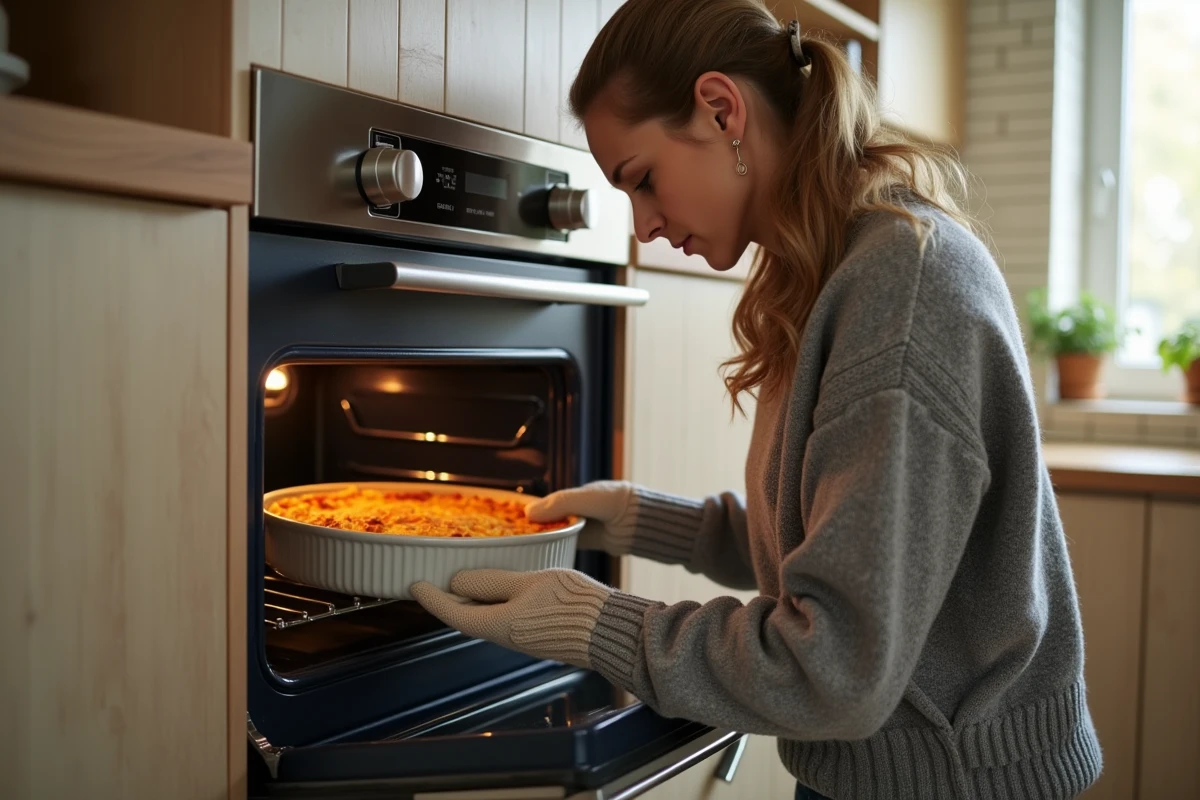
A gratin quickly loses its texture when exposed to excessive or uneven heat during reheating. An excessive temperature in the oven promotes surface drying, while the inside remains lukewarm or even cold.
Some chefs recommend adding a bit of liquid, while others suggest partial covering to preserve moisture without softening the crust. Several common mistakes complicate the process and harm the final result.
Why does the gratin tend to dry out when reheated in the oven?
The scene is familiar: a gratin just out of the oven, perfectly fluffy, then suddenly, upon reheating, it turns into a dry block. This phenomenon is not inevitable but a direct consequence of the dry heat of the oven. When reheating, the heat does not discriminate: it first hits the surface, accelerates the evaporation of internal moisture, and leaves the crust hardening, while the filling loses its creaminess.
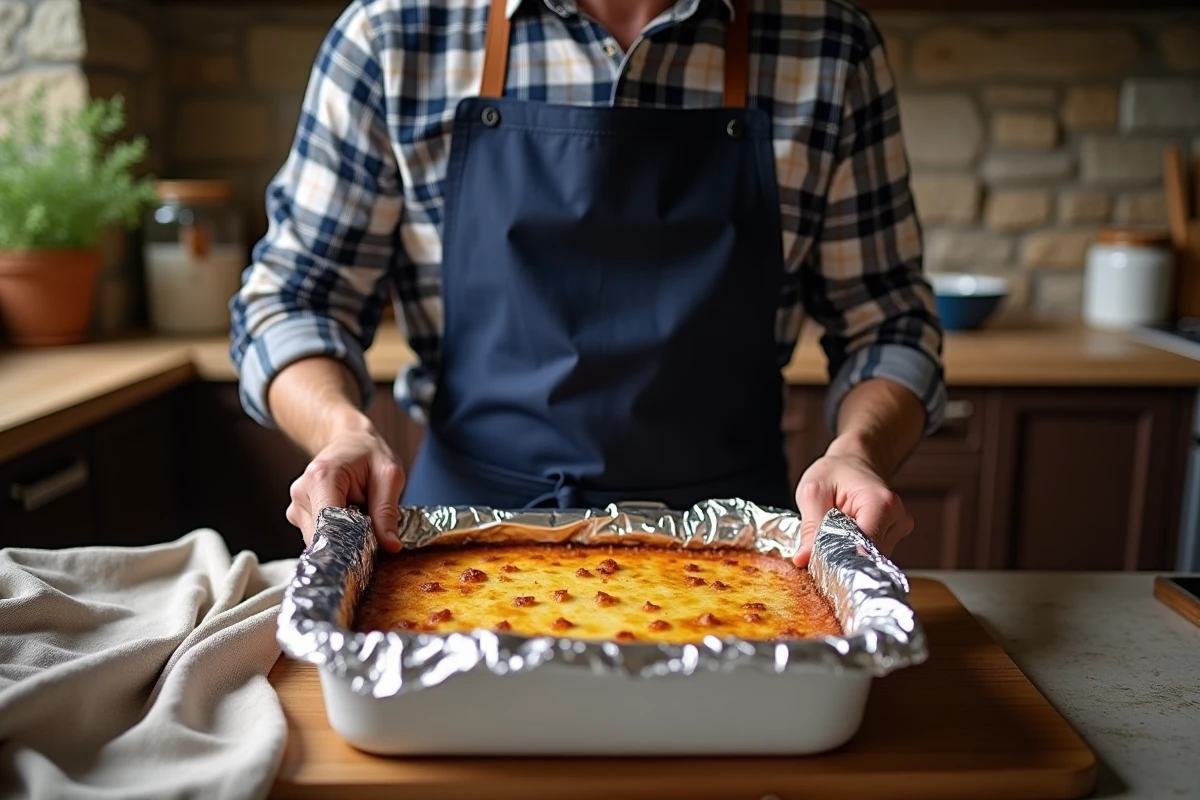
To avoid this classic trap, aluminum foil becomes your best ally. It acts as a shield, retaining steam and protecting the texture. Choose a moderate heat, around 150°C, to avoid shocking the dish. Place the gratin in the center of the oven, cover it with foil without too much tightness, and let it warm gently. After about 15 minutes, remove the foil for a few moments at the end of reheating to achieve a golden crust without overcooking.
This method, found among the techniques for reheating a gratin in the oven, makes all the difference. A gratin dauphinois, a vegetable gratin, or a pasta gratin: each variant requires this attention to detail. Respect the time, monitor the temperature, and don’t forget the cover. It’s the assurance of rediscovering the pleasure of homemade, without compromise or disappointment.
Common mistakes to avoid to preserve texture and flavor
The microwave seems like a quick solution, but it ruins the texture of a gratin. Its uneven heat dries out the surface and sometimes leaves the center lukewarm. Nothing beats the traditional oven for achieving a flavorful dish, reheated thoroughly without losing its moistness.
Before baking, the choice of dish is not trivial. A metal dish promotes evaporation, while glass or ceramic retains moist heat better, which is essential for maintaining a fluffy texture. Always cover with a sheet of aluminum foil: this gesture makes a difference. An airtight lid traps too much steam and ultimately makes the crust soggy. The expected consistency evaporates, along with the indulgence.
Be careful also with the direct transition from the refrigerator to the oven. This sudden thermal shock damages the structure of the gratin, dries out the edges, and sometimes leaves the center cold. Take your time: remove the dish, let it come to room temperature for at least twenty minutes. And beware of overcooking: too much heat for too long, and the promise of a melting gratin vanishes.
Finally, freezing a pre-cooked gratin is never ideal, especially with a cream or potato base. Prefer refrigeration to preserve flavor and texture, thus limiting unpleasant surprises during reheating.
Practical tips and tricks for evenly reheated and fluffy gratin
Here are some simple gestures to adopt for successfully reheating your gratin without sacrificing pleasure:
- Preheat the oven to a gentle temperature, between 140 and 160°C, to allow for a gradual increase in heat. This pace avoids the contrast between a crust that is too hard and a still cold center.
- Remember to cover the dish with a sheet of aluminum foil, without tightening it, to retain steam. Remove it five to ten minutes before the end to revive the golden and slightly crispy crust.
- For gratins made with potatoes, butternut squash, sweet potatoes, or vegetables, add a few tablespoons of cream, milk, or broth on the surface before baking. This gesture nourishes the dish and guarantees a melting texture.
- If you enjoy gratin crusts, sprinkle a bit of grated cheese, breadcrumbs, or even some seeds or crushed hazelnuts for a final crunch.
- For individual portions, prefer glass or ceramic dishes: heat circulates better, thus preserving the fluffiness. To keep the gratin warm without drying it out, the warming drawer remains a good option just before serving.
In the end, reheating a gratin is a matter of patience and precision. The oven then becomes the ally of rediscovered indulgence, one that, with every bite, recalls the simple and comforting pleasures of shared cooking.