At 23 degrees, the thermometer is in a gray area. Too warm for a thick jacket, too cool for a thin dress worn alone in the evening. The ideal outfit for women at this temperature relies less on style and more on the choice of materials and the ability to layer without overheating.
Thermal comfort at 23 degrees: what the material really changes
Have you ever noticed that polyester pants stick to the skin as soon as the sun shines, even in mild weather? The problem doesn’t come from the cut, but from the fiber. Synthetic materials retain body heat and block the evaporation of sweat.
At 23 degrees, cotton and linen remain the most suitable materials. Cotton absorbs moisture and dries quickly. Linen, being more breathable, allows air to circulate between the skin and the fabric.
A nuance often overlooked: pure linen wrinkles quickly, which discourages many women on a daily basis. Linen/cotton blends retain the breathability of linen while limiting the wrinkled appearance after a few hours. It’s a good compromise for knowing how to dress at 23 degrees for women without sacrificing the overall look.
Avoid nylon and polyester, even in small proportions. A top labeled “cotton” but made of 40% synthetic is enough to cause noticeable discomfort by midday. Read the labels, not just the online descriptions.
Women’s outfit for 23 degrees: the logic of light layering
The real challenge at this temperature is the gap between the cool morning and the sunny afternoon. Wearing a single layer forces you to choose between being cold at 8 AM and being hot at 2 PM.
Layering two thin layers is better than one thick layer. A lightweight cotton t-shirt under an open linen shirt, for example, allows you to remove the shirt at noon without ending up in technical underwear.
Combinations that work in spring
- A straight-leg jean or fluid cotton pants, paired with a short-sleeved top and a lightweight unlined blazer. The blazer can be easily removed and fits in a bag.
- A mid-length dress in cotton or blended linen, worn with a thin cardigan or short sweater. The dress remains the most breathable garment, and the cardigan compensates for the morning chill.
- A canvas bermuda with an oversized linen shirt. The loose fit of the shirt creates natural air circulation, and the bermuda avoids the “too dressed up” effect on mild days.
The goal is not to pile on pieces, but to keep a removable layer. If you can’t take anything off when the temperature rises, layering fails its purpose.
Colors and cuts: what changes the feel in mild weather
Dark colors absorb more heat than light shades. At 23 degrees, the difference remains moderate, but it exists. A black t-shirt in full sun heats up noticeably more than a white t-shirt of the same material.
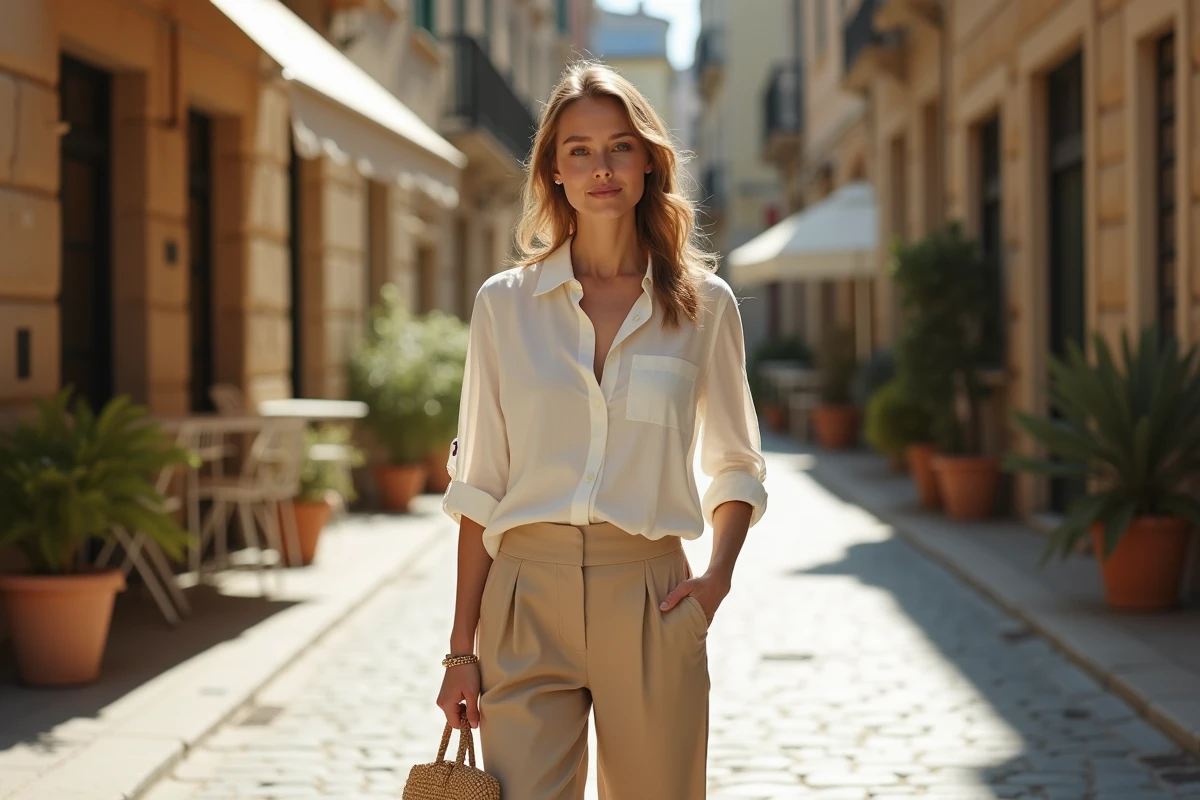
Neutral and pastel tones reflect light better. Beige, off-white, sky blue, water green: these colors limit heat accumulation and easily match with each other. They also allow for varying looks without multiplying pieces in the wardrobe.

The cut matters as much as the color
A fitted garment presses the fabric against the skin and reduces air circulation. Loose or semi-loose cuts are more comfortable in mild weather. A wide cotton pant provides significantly more comfort than a slim fit, even if both are made from the same material.
Why this choice? Because the air trapped between the fabric and the skin acts as a lightweight thermal insulator. When it’s cool, it retains some heat. When the sun shines, it allows sweat to evaporate. Straight or flared cuts take advantage of this natural effect.
Accessories and shoes to complete a look at 23 degrees
Closed shoes made of thick leather quickly become uncomfortable once the temperature exceeds 20 degrees. Opt for open models or breathable canvas sneakers. Espadrilles, very lightweight, work well in a casual context.
On the accessory side, a thin cotton scarf or a lightweight shawl is a great alternative to a cardigan for the end of the day. The scarf takes up very little space and can be tied over the shoulders or around the neck in seconds.
Large handbags made of thick leather add weight and warmth against the body. A canvas or raffia bag lightens the silhouette and remains consistent with the seasonal style.
Putting together an outfit for 23 degrees is about solving a comfort issue as much as a style one. The most useful reflex remains to check the fabric composition before purchase, to plan a removable piece to manage temperature variations, and to choose cuts that allow the body to breathe. The most elegant garment at this temperature is the one you forget you are wearing.