
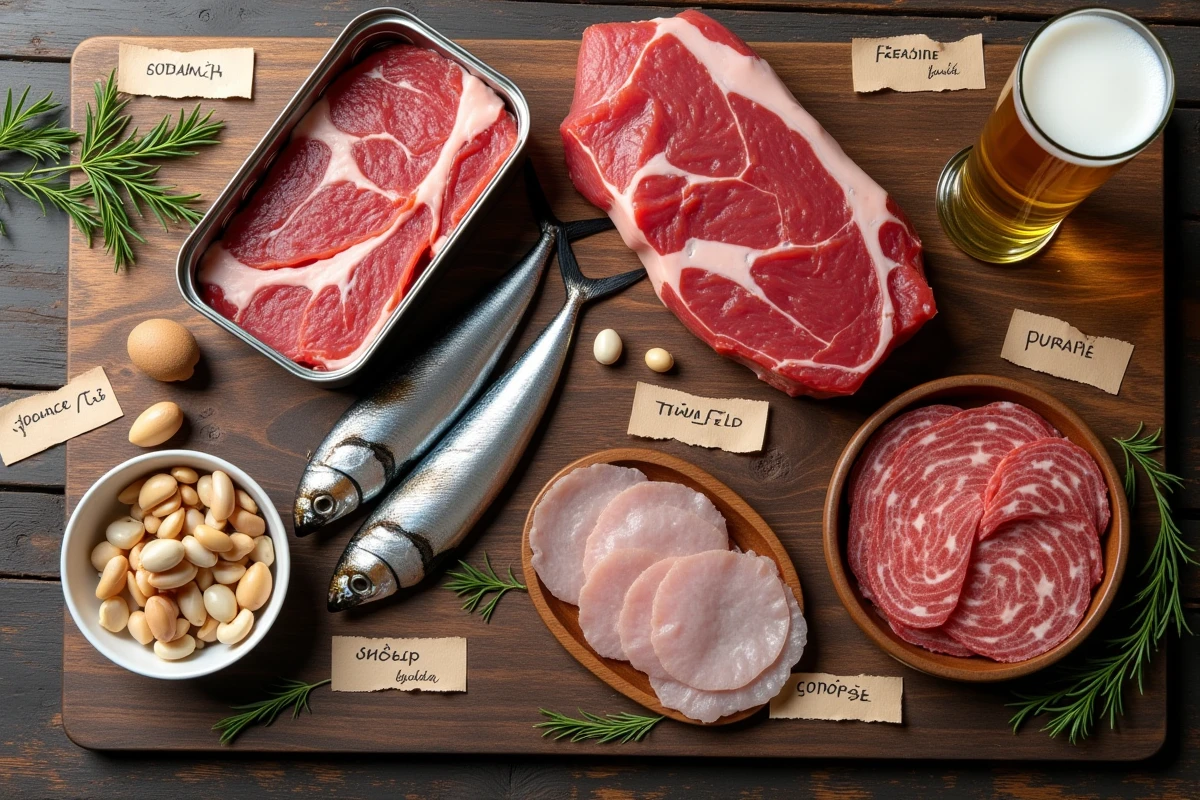
Uric acid is a waste product resulting from the breakdown of purines, nitrogenous substances found in many foods. When its level in the blood exceeds a certain threshold, urate crystals deposit in the joints and trigger a gout attack. Diet remains the most direct lever to act on this level, but not all purine-rich foods are equal.
Purine content of common foods: comparative table
| Food category | Examples | Purine content | Impact on uric acid levels |
|---|---|---|---|
| Organ meats | Liver, kidneys, sweetbreads | Very high | Strong |
| Fatty fish and seafood | Sardines, anchovies, herring, shrimp | High | Moderate to strong |
| Red meats | Beef, lamb, game | High | Moderate to strong |
| Legumes | Lentils, chickpeas, dried beans | Moderate | Low to moderate |
| Fructose-sweetened beverages | Sodas, industrial juices | None (purines absent) | Strong (fructose metabolic pathway) |
| Beer (including non-alcoholic) | All beers | High (guanosine) | Strong |
| Low-fat dairy products | Plain yogurt, skim milk | Very low | Protective |
This table highlights an often underestimated point: fructose increases uric acid without containing any purines. Its mechanism involves the accelerated breakdown of ATP in the liver, which generates uric acid as a byproduct. To better understand the foods to avoid in case of uric acid, it is necessary to distinguish these two distinct pathways.
Fructose and sugary drinks: the threat that doesn’t come from purines
Most lists of discouraged foods focus on meats and organ meats. They often overlook fructose, while a study published in The Lancet Rheumatology in February 2025 points to an increase in cases of hyperuricemia linked to the rising consumption of sugary drinks, particularly among young adults.
The fructose added to sodas, industrial fruit juices, and certain corn syrups acts differently from dietary purines. It stimulates the endogenous production of uric acid at the hepatic level.
- Regular sodas contain significant amounts of fructose-glucose syrup, directly correlated with an elevation of uric acid levels after ingestion.
- Fruit juices, even labeled “100% pure juice,” provide a concentration of free fructose much higher than that of a whole fruit consumed with its fibers.
- Some industrial sauces (ketchup, barbecue sauces) contain non-negligible amounts of glucose-fructose syrup.
Reducing sugary drinks can lower uric acid levels as much as limiting red meat. This is a lever that many patients ignore because it does not fall into the “purines” category.
Beer and alcohol: different mechanisms depending on the type of drink
Alcohol slows the renal elimination of uric acid. Beer combines two problems: it contains guanosine (a purine) and its ethanol slows urinary excretion.
In contrast, red wine, consumed in small amounts, seems to have a more moderate impact on uric acid levels than beer or spirits. This is not a free pass to drink freely, but the difference is documented.
Beer, including non-alcoholic, remains the most unfavorable alcoholic beverage for people prone to gout, due to its own purine content. Spirits, on the other hand, do not provide purines but block renal excretion with formidable efficiency.
Low-purine diet for vegetarians and vegans: the case of legumes
Legumes (lentils, chickpeas, dried beans) are the main source of plant-based protein for those who do not consume meat. They do contain purines, but their impact on uric acid levels is significantly lower than that of organ meats or fatty fish.
This distinction is crucial for vegetarians and vegans. Removing legumes from their diet would deprive them of complete proteins, iron, and fiber, without a proportional benefit on uric acid levels.

Adapt rather than eliminate
Plant-based purines raise uric acid levels less than animal-based purines. Several hypotheses explain this gap: the presence of fibers that slow absorption, the differing amino acid composition, and the absence of saturated fats that often accompany animal proteins.
For a vegan diet compatible with controlled uric acid levels, a few adjustments are sufficient:
- Spread the consumption of legumes into moderate portions throughout the day, rather than a single concentrated meal.
- Favor tofu and tempeh, whose processing reduces purine content compared to dry seeds.
- Supplement with low-fat dairy products (for vegetarians) that have a demonstrated protective effect against hyperuricemia.
- Monitor added fructose intake, an aggravating factor often overlooked in processed plant diets.
DASH diet and uric acid: a global dietary approach
The DASH diet (Dietary Approaches to Stop Hypertension), originally designed to reduce hypertension, proves effective on uric acid. According to a meta-analysis published in Arthritis & Rheumatology in January 2026, the DASH diet stabilizes uric acid levels better than the Mediterranean diet in obese patients.
This diet relies on a high consumption of fruits, vegetables, whole grains, and low-fat dairy products, with strict limitations on salt and saturated fats. Its richness in potassium and fiber promotes renal excretion of uric acid.
In contrast, the Mediterranean diet, despite its recognized qualities, includes more wine and fatty fish, two elements that can maintain higher uric acid levels in at-risk profiles.
Choosing a diet to control uric acid is not just about a list of prohibitions. The source of purines matters as much as their quantity, and added fructose represents a risk factor at least as powerful as organ meats. For vegetarians, adjusting portions of legumes remains more relevant than eliminating them. The most underestimated parameter is likely what we drink, well before what we eat.