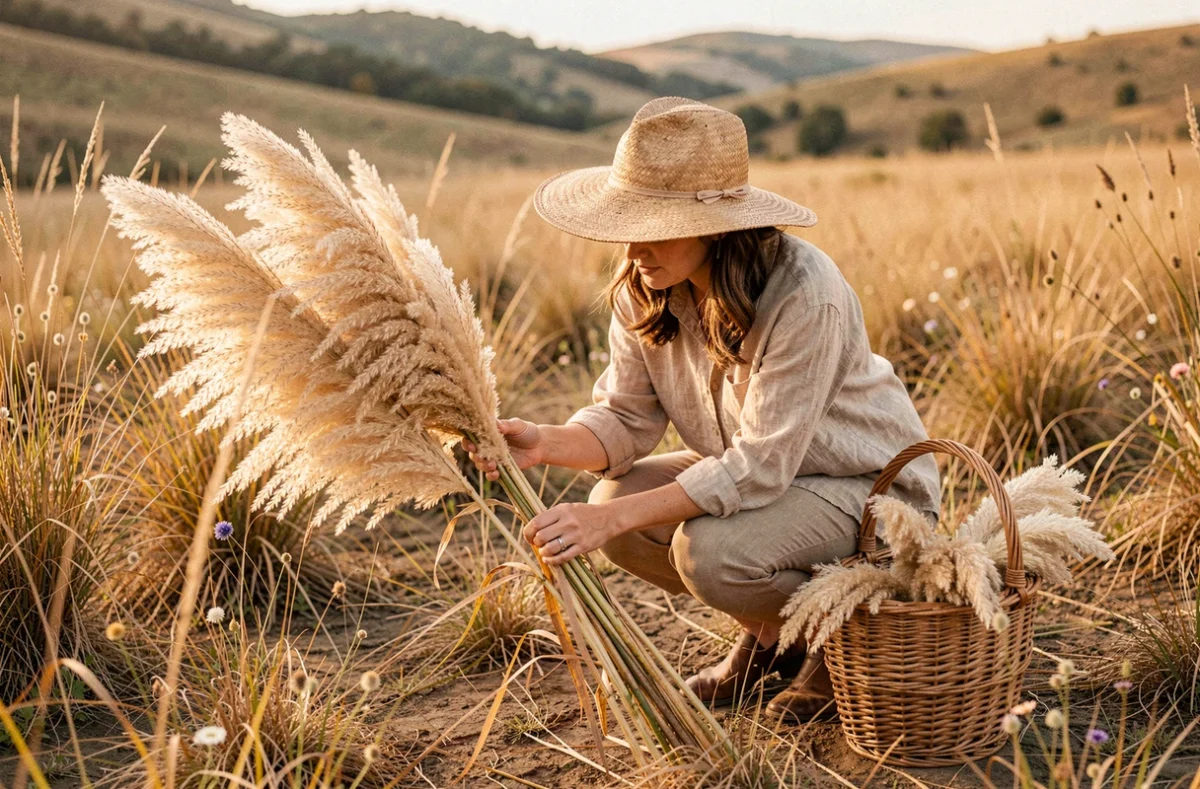
Pampas grass (Cortaderia selloana) produces spectacular plumes that attract fans of natural decoration. Before heading out to gather, one piece of information changes everything: since 2023, this plant has been listed on the French list of regulated invasive exotic species. The possession, transport, sale, and purchase of live specimens are prohibited in mainland France, and the deadline given to professionals to sell their stocks ended on September 1, 2024.
Collecting dried plumes remains possible under certain conditions, but the legal framework reshapes the locations and methods of harvesting.
Pampa Regulation in France: What is Allowed and What is No Longer Allowed
| Action | Status since 2023 | Note |
|---|---|---|
| Purchase or sale of live plants | Prohibited | Professional stocks must be sold by September 1, 2024 |
| Gift or exchange of live specimens | Prohibited | Includes gifts between individuals |
| Harvesting of plumes (dried inflorescences) | Tolerated under conditions | Depends on the landowner and local regulations |
| Planting in a private garden | Prohibited for new plants | Existing plants must be managed to limit spread |
| Gathering in national parks or reserves | Often prohibited | Stricter rules, check with the park management |
This table clarifies a point that many decorative guides overlook: wild harvesting is not automatically allowed outside private lands. Even though pampas grass is not a protected plant in the botanical sense, harvesting depends on the landowner, the regulations of the natural site, and, in some cases, a prefectural order limiting quantities or harvesting periods.
In practice, this means that spotting a slope covered with plumes along a road is not enough. You need to check who owns the parcel and if a local order regulates harvesting. National parks impose additional restrictions that can lead to a total ban on plant collection.
To know precisely where to find pampas branches considering these constraints, it is better to cross visual spotting with a quick land verification (online land registry or contact with the town hall).
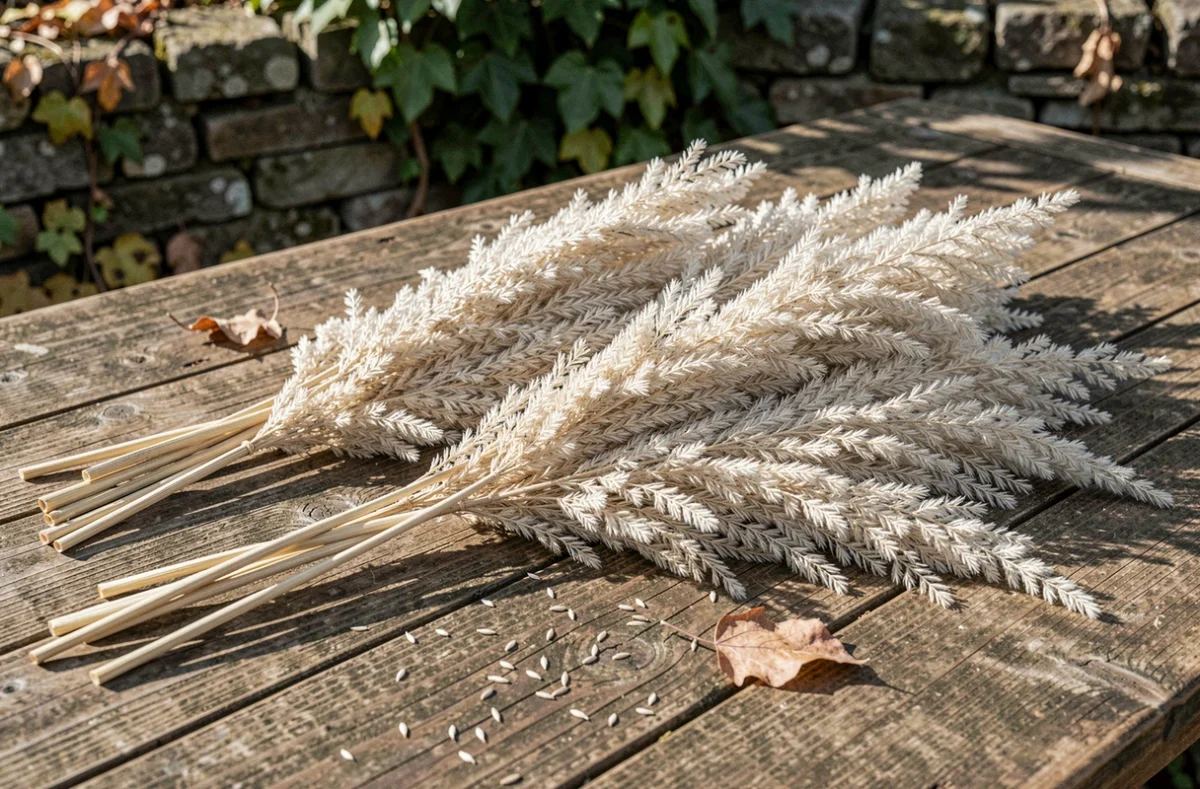
Pampa Harvesting Locations: Comparison of Environments
Pampas grasses bloom from September to October. They are mainly found along waterways, lakes, coastlines, and on roadside slopes. Not all these environments offer the same interest or constraints.
Riverbanks and Atlantic Coast
Pampas grass widely colonizes wetlands and dunes along the Atlantic coast, from Vendée to the Basque Country. These areas often provide large plumes, as the moist soil promotes growth. However, many of these sectors are classified as protected natural areas or managed by the Coastal Conservatory, complicating legal harvesting.
Roadside Slopes and Peri-Urban Wastelands
The sides of departmental roads and wasteland areas are the most accessible spots. The plant, highly invasive, establishes itself spontaneously on virgin land. The owner is often the local community, and some municipalities tolerate harvesting, even encouraging it as part of the fight against invasive species.
Peri-urban wastelands represent the best compromise between accessibility and legality. A call to the town hall usually clarifies whether the land is communal and if harvesting is allowed.
Existing Private Gardens
Many individuals still have pampas plants planted before the ban. As the plant proliferates rapidly (it can reach several meters in height), some owners are happy to part with their plumes. This is a lead to explore through local sharing groups or neighborhood networks.
Harvesting Precautions: Equipment and Seed Management
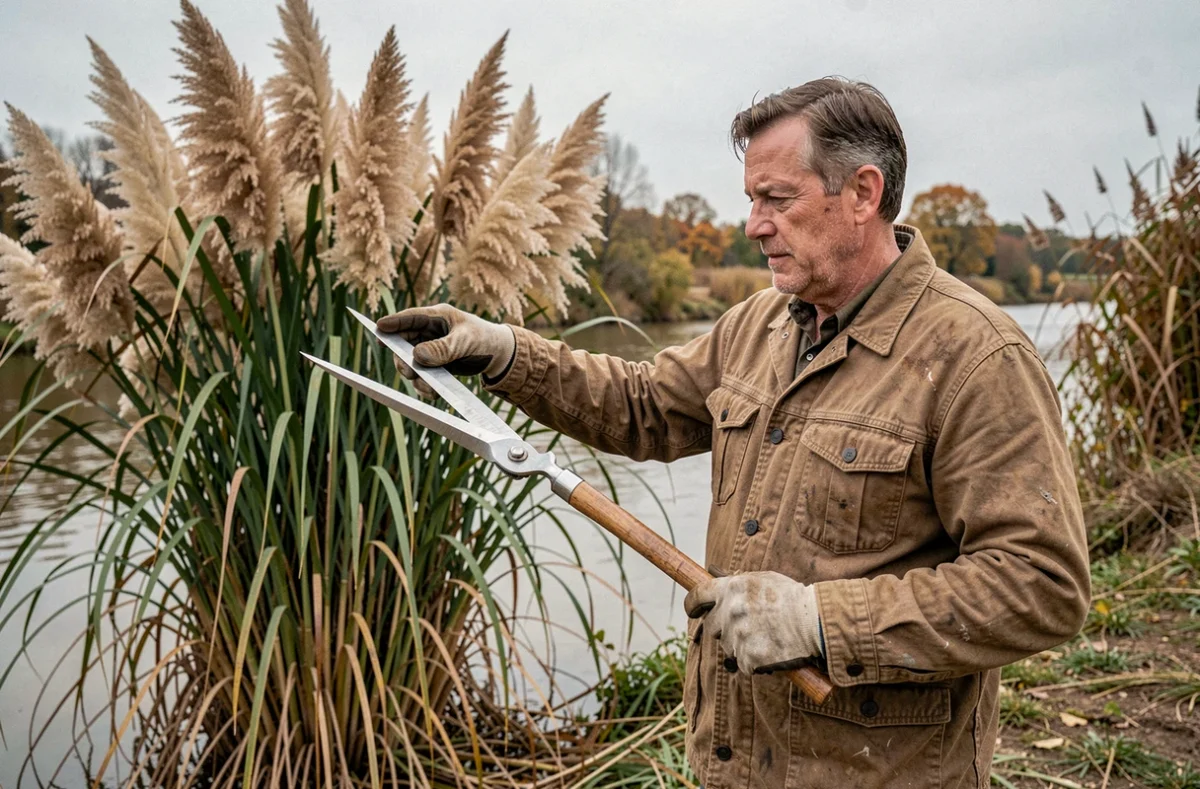
Existing guides mention pruning shears but underestimate the real risks of handling a mature clump. The leaves of Cortaderia selloana are extremely sharp: they can cause deep cuts to hands and forearms.
Proper equipment goes beyond just pruning shears:
- Thick gardener-type gloves that cover the wrists to handle the stems without injuring yourself on the leaves
- Protective goggles, as fragments of leaves can frequently fly off during cutting and can be irritating
- An airtight bag (thick garbage bag type) to transport the inflorescences without dispersing seeds into the environment
- A sheet or blanket to wrap the plumes in the vehicle and prevent fluff from settling everywhere
Cutting the inflorescences before the seeds are fully mature significantly reduces the risk of dispersal. If the seeds are already mature, the plumes must be immediately sealed in a bag. A often overlooked point: never dispose of pampas residues in compost or with green waste, as this promotes the spread of this invasive species.
Drying and Preserving Pampas Plumes
Once cut, the plumes require proper drying to maintain their volume and decorative hold. The most reliable method is to hang them upside down in a dry, ventilated place away from direct light for two to three weeks.
A few points condition the quality of the result:
- Harvest on dry days, preferably late in the morning when the dew has disappeared, to avoid mold during drying
- Apply a light coat of hairspray once drying is complete to fix the feathers and limit fiber loss
- Store dried plumes upright in a tall vase or lying flat in a rigid box, never compressed, to preserve the shape of the plume
Well-dried plumes can last for several years without additional treatment. Hairspray remains the only truly useful finish: it prevents fibers from detaching at the slightest draft, which is the main drawback of an indoor-exposed pampas.
The regulatory framework surrounding pampas makes harvesting more restrictive than a few years ago. Checking the land status, equipping properly, and managing seeds rigorously are not optional precautions. This is the condition to enjoy decorative plumes without contributing to the spread of a species whose management is already costly for communities.