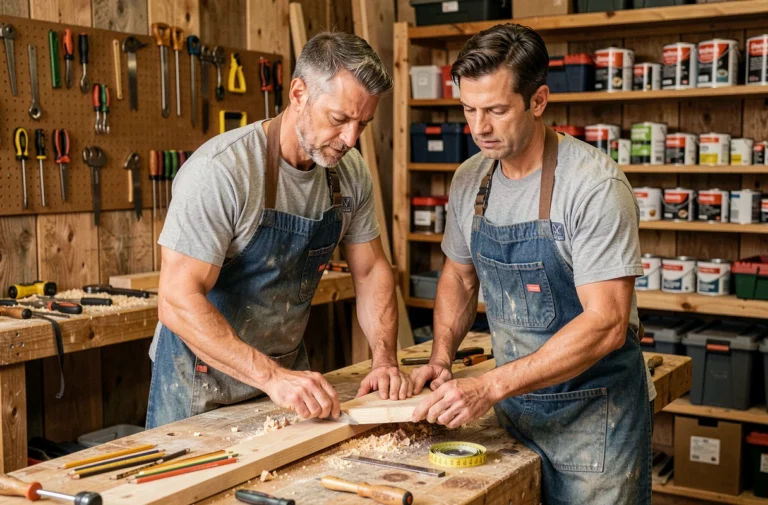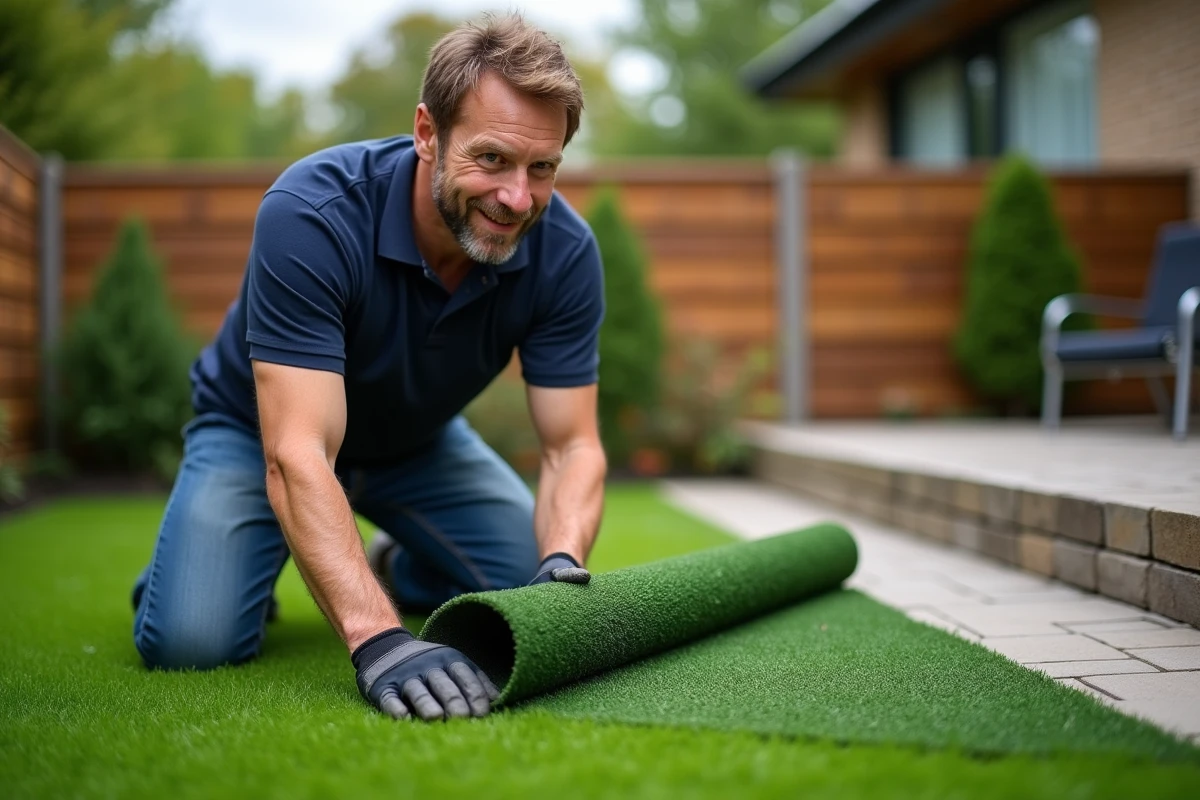
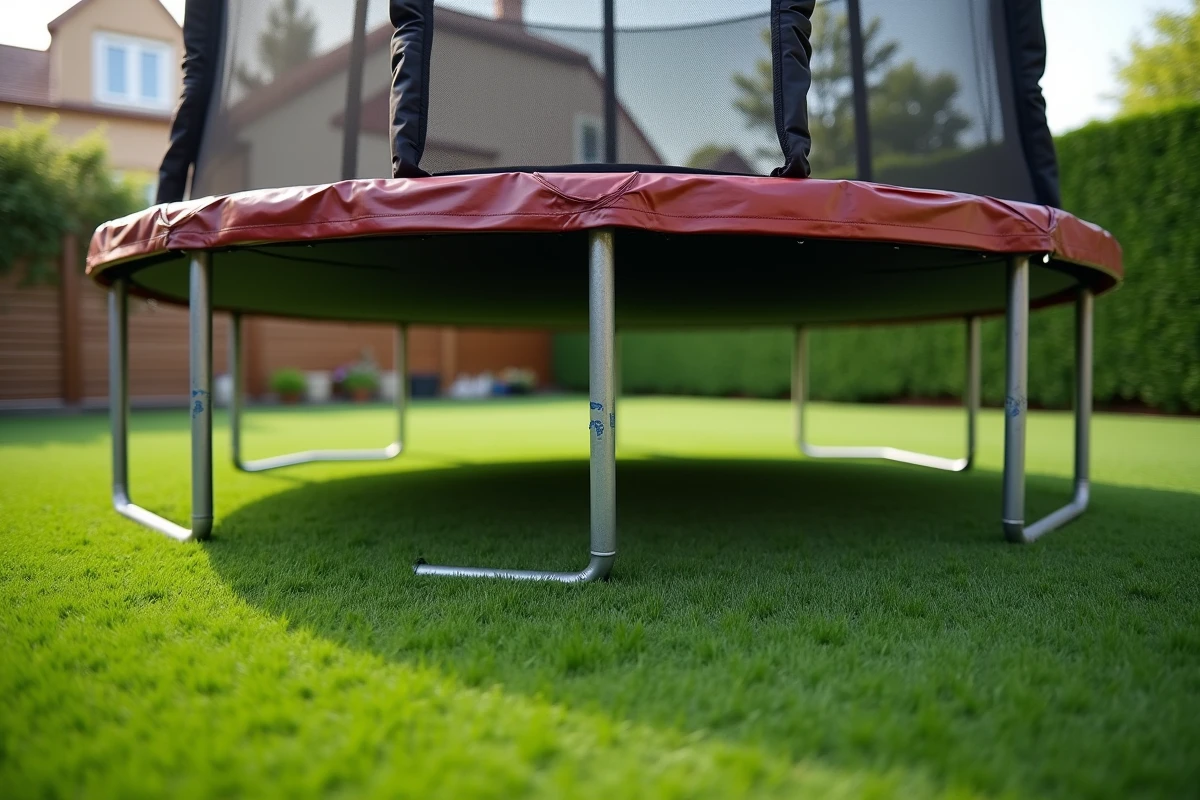
A trampoline placed on artificial grass is primarily a static load issue. The legs of the frame concentrate the weight of the structure and users on a few square centimeters of synthetic fiber, and this localized pressure crushes the strands, deforms the filling, and can permanently mark the surface. Before diving in, it’s wise to take a close look at what is actually happening under the feet of the trampoline, not just around it.
Puncture resistance of artificial grass: the criterion that no one checks
The first instinct when considering putting a trampoline on artificial grass is to check that the surface is flat. Leveling matters, but it overlooks the real issue: the synthetic grass’s ability to withstand a point load without deforming.
In recent years, some manufacturers of artificial grass have offered ranges boasting enhanced puncture resistance, designed for children’s play areas and high-traffic zones. This technical criterion, often absent from entry-level product sheets, makes all the difference when a metal foot is constantly pressing on the fiber.
Specifically, short and dense grass handles the load better than long and soft grass. The high fiber height creates a nice visual effect, but the strands flatten more quickly under a trampoline foot and do not stand back up after a few weeks.
If you have the choice before installing the grass, prioritize a product with a sufficiently dense weight and a moderate fiber height in the area designated for the trampoline. If the grass is already laid, at a minimum, you need to insert a protective layer (we’ll come back to that later).
Anchoring the trampoline on glued synthetic grass: the slab trap
The anchoring kits sold with most trampolines are designed for soft ground. The stakes screw or are driven into the earth, and it is the friction of the ground that keeps them in place. On artificial grass laid directly on the ground, you can still manage: you go through the surface and plant into the soil underneath.
On synthetic grass glued to a concrete slab, the situation changes radically. The stakes are useless. Planting them would mean piercing the glued surface, which would cause gradual detachment and water infiltration beneath the surface.
Alternative anchoring solutions on slabs
There are two realistic options when the grass rests on a hard surface:
- Weighting blocks placed at the base of each post, filled with sand or water. They do not damage the surface but add weight to the base. The necessary weight depends on the size of the trampoline and wind exposure.
- A mechanical anchoring in the slab, done before laying the grass or by locally drilling with a sealant around each fixing point. This solution is more robust but requires preparation work.
- Straps passed under the slab (possible only if access to the edges or drains is available). Feedback varies on this point, as it all depends on the terrain configuration.
In any case, checking the stability of the anchoring after each windy episode remains a habit to adopt. A poorly secured trampoline on a smooth surface can move more easily than on soil.
Protection of synthetic grass under the feet of the trampoline
Even with resistant grass and solid anchoring, the feet of the trampoline remain a point of constant friction. Every jump transfers a dynamic load that impacts the ground supports. Without protection, marked imprints can appear within weeks, with crushed strands that do not recover.
Shock-absorbing tiles or protective mats
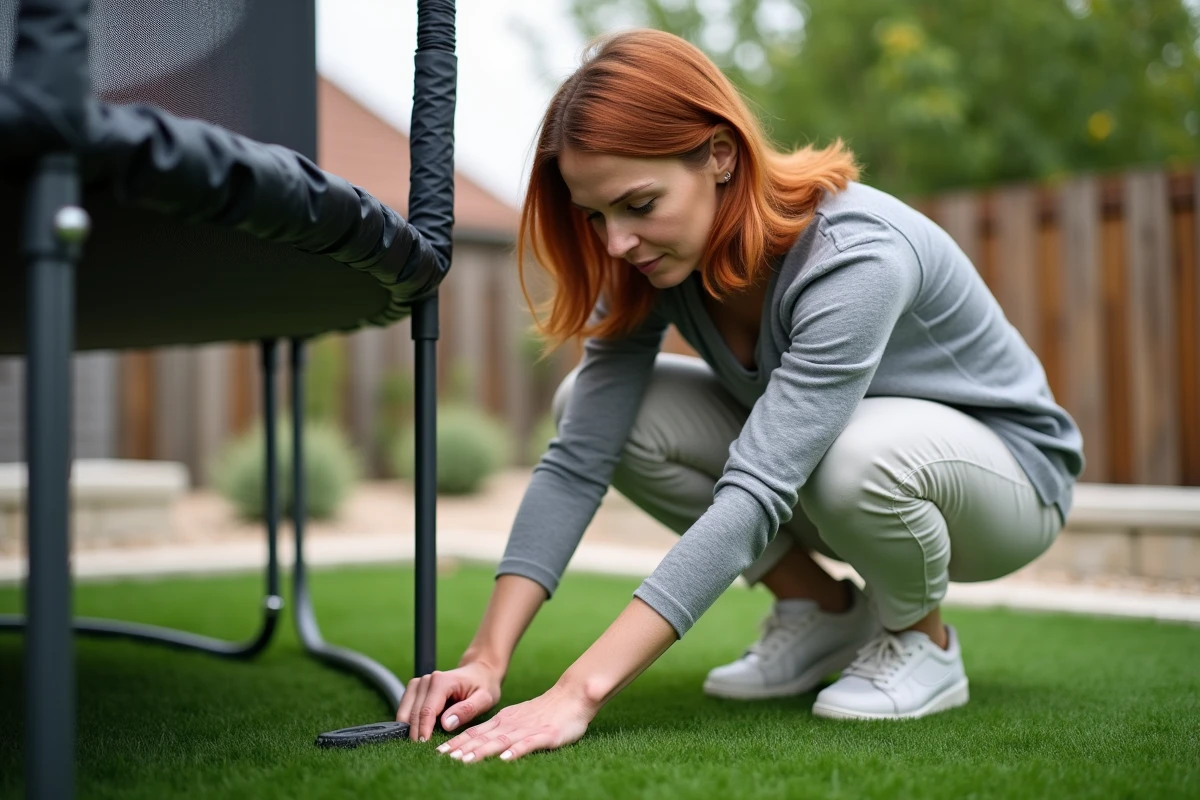
The most common solution is to place rubber tiles under each foot of the trampoline. These tiles serve two functions: they distribute the load over a larger surface and absorb some of the vibrations transmitted to the ground.
Specific tiles for garden equipment can be found, but gym floor tiles (like puzzle pieces made from recycled rubber) also work. The point to check is the thickness: a tile that is too thin does not distribute pressure adequately, while a tile that is too thick can create instability at the foot.
Another approach is to cut a piece of treated wood (like decking board) and slide it under each post. Wood distributes the load well, but it can also mark the grass if left in place for too long.
Then, alternate the position every few months.
Drainage and overheating: two underestimated problems on artificial grass
Synthetic grass drains water through micro-perforations in its backing. A trampoline placed above creates a permanent shaded area where water stagnates longer than in full sunlight. After heavy rain, you end up with a slippery surface under and around the trampoline, increasing the risk of falls upon landing.
The problem reverses in summer. Artificial grass heats up significantly more than natural grass under direct exposure. Under the trampoline, the shaded area remains cooler, but the immediate perimeter can become scorching for bare feet of children climbing up or down.
Concrete actions to limit these effects
- Check that the slope of the ground under the grass directs water away from the trampoline area, not towards it.
- After rain, quickly lift the bottom of the safety net to ventilate the area and speed up drying.
- In hot weather, briefly water the grass around the trampoline before use to lower the surface temperature.
These actions may seem trivial, but well-drained and ventilated artificial grass lasts significantly longer under a trampoline than grass left unattended.
Placing a trampoline on synthetic grass does not pose an insurmountable problem, provided that the three critical points have been anticipated: the mechanical resistance of the surface, the anchoring method suitable for the support, and the protection of the support areas. Quality artificial grass, combined with distribution tiles and rethought anchoring, can withstand the load very well over several seasons.